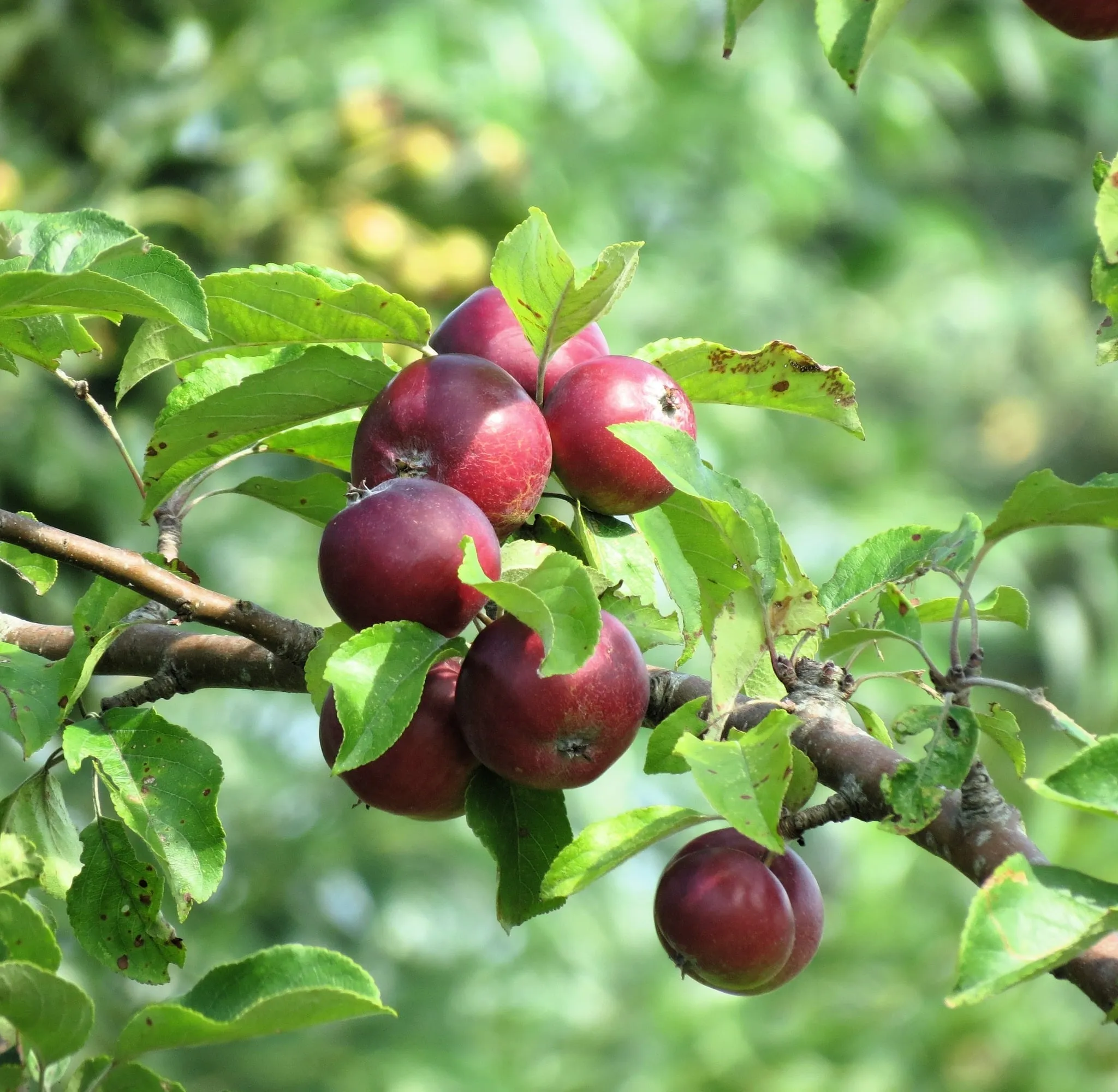
Plant in the Spotlight: Kaki and persimmon
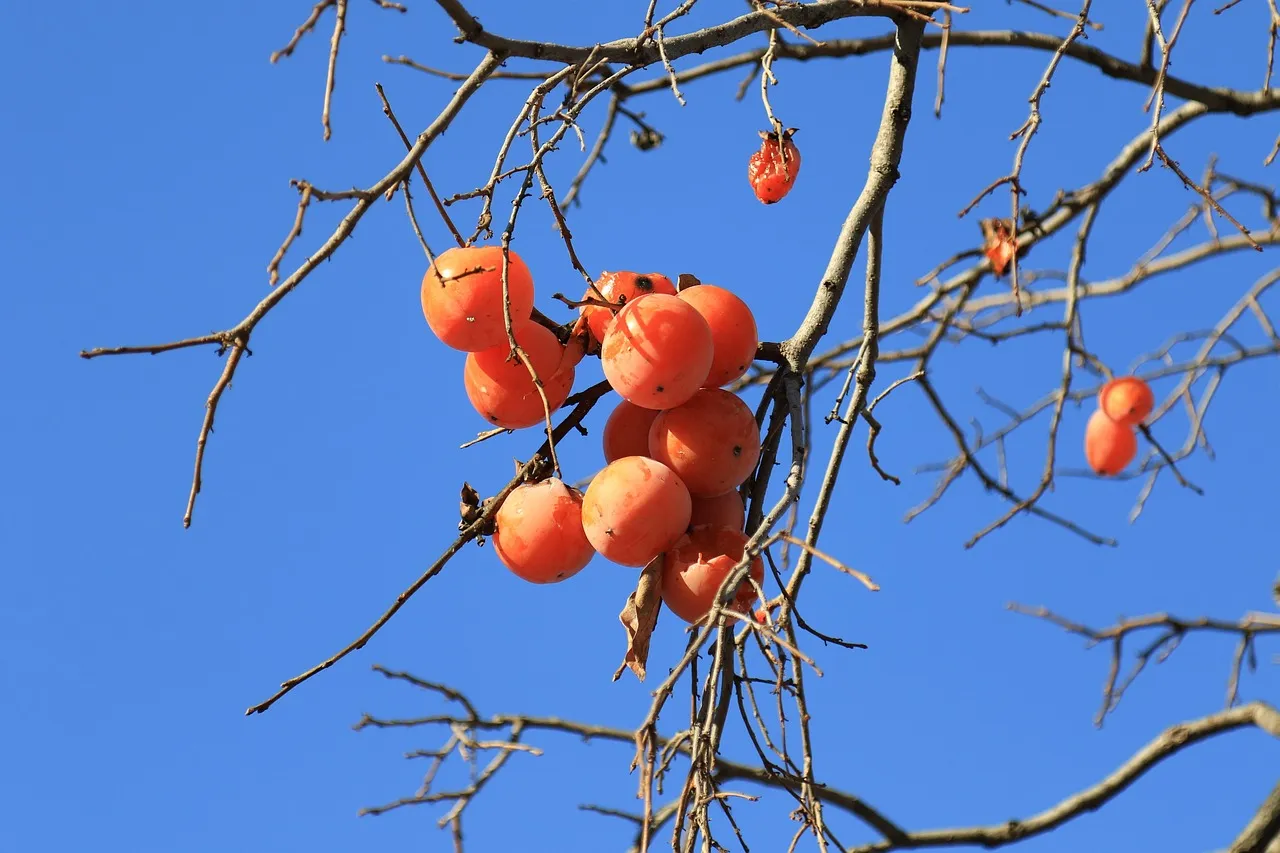
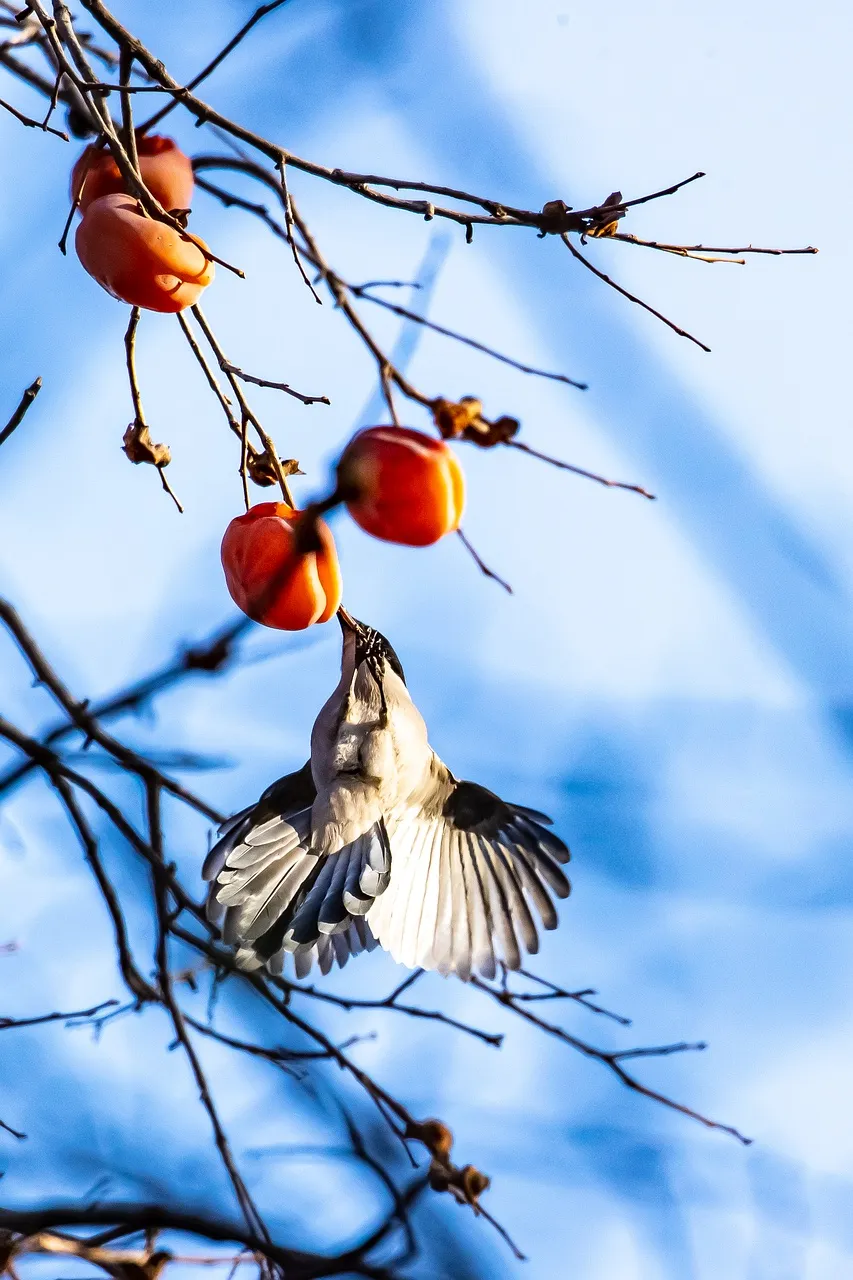
In October and November something special happens to the kaki. The leaves turn orange and red and drop. Then the tree is left standing with nothing but fruit. Bright orange globes on bare branches, sometimes well into winter. Few trees in a food forest look this good at this time of year.
So it is time to put the kaki in the spotlight. And its American cousin, the persimmon, while we are at it.
From China to Japan
The kaki comes from China, where people have grown it for more than two thousand years. It reached Japan in the seventh century and Korea in the fourteenth. In Japan it became one of the country’s best-loved fruits. The name kaki is Japanese too.
The botanical name is Diospyros kaki. Diospyros is often translated as ‘fruit of the gods’. The kaki belongs to the same family as the ebony tree, and you can see that in the wood: it is hard and dark.
In the nineteenth century the kaki came to southern Europe and California. In Italy and Spain it became a common garden tree and later a real crop.
And how did it reach the Netherlands?
We do not know exactly when the first kaki was planted in the Netherlands. But there is a lovely story from Utrecht.
In 1951 Dick and Wiene Alma, volunteers at the Oude Hortus in Utrecht, cycled from Lugano to Venice. Along the way they bought a few kakis at a market. They took the seeds home and put them in a flowerpot. A year later there was a small kaki tree. In their own garden it never bore fruit. When they moved, the tree got a sunny spot outdoors in the garden of the Oude Hortus. Now it is laden every year, sometimes so heavily that the branches need propping up. Blackbirds and other birds feast on the fruit. The Utrecht University Museum tells the full story.
The tree simply stands outside, in the middle of Utrecht. That shows what a kaki needs to bear fruit here: sun and warmth. And that it copes fine with a Dutch winter.
Kaki or persimmon?
In the shop you see both names. They are used interchangeably, but there is a difference behind them.
The kaki. The soft, orange fruit you eat with a spoon once it is so ripe it almost falls apart. Many kakis are astringent while they are firm. That comes from tannins, the same substances that give tea or red wine that dry feeling in your mouth. As the fruit ripens and softens, that feeling disappears and a sweet, honey-like taste is left.
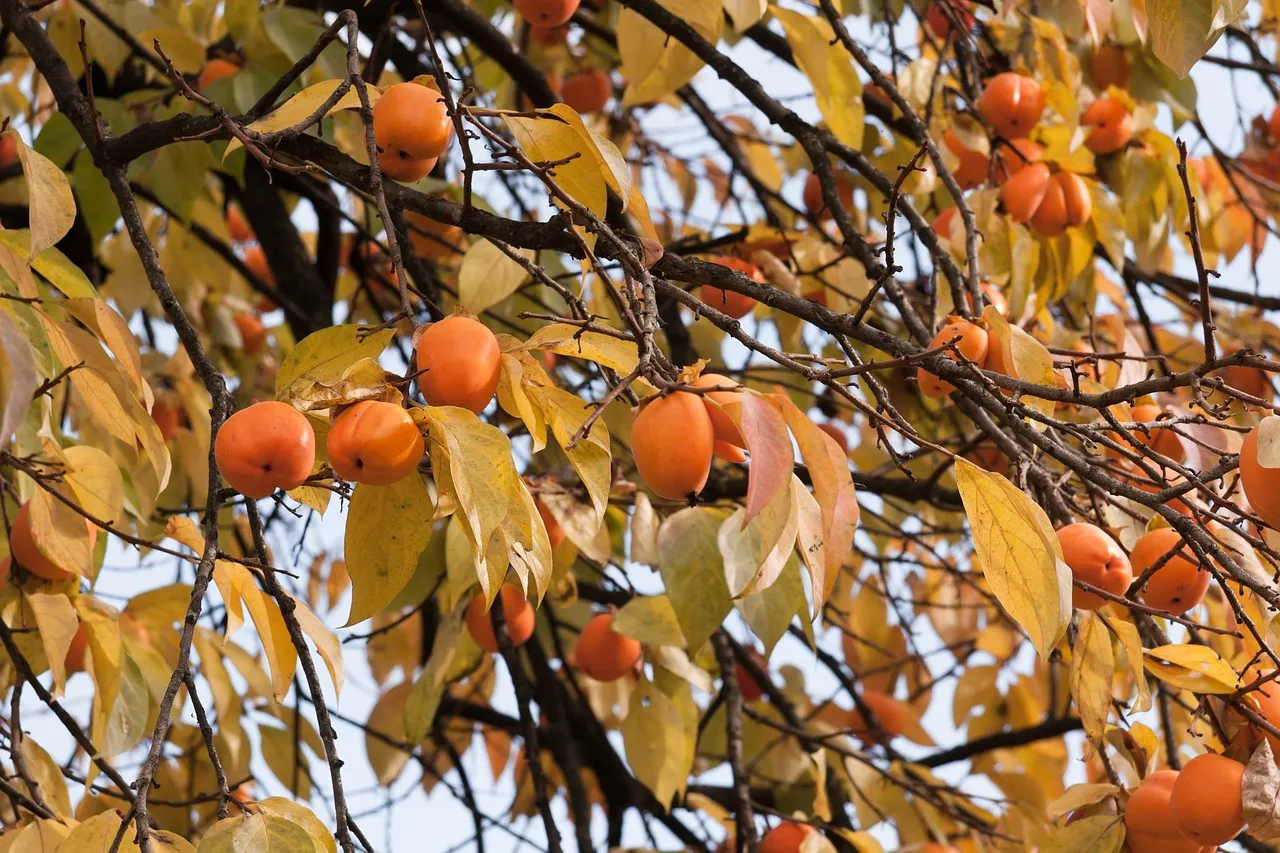
The persimmon from the shop. The firm fruit you can eat like an apple. It usually comes from the region around Valencia in Spain. The cultivar is called ‘Rojo Brillante’ and Persimon is a brand name. By itself this cultivar is astringent too. After harvest the fruit spends some time in a room full of carbon dioxide. That binds the tannins, so the astringency disappears while the fruit stays firm. Sharon fruit from Israel is a similar story, with a different cultivar.
There are also kakis that are naturally non-astringent, such as ‘Fuyu’. You can eat those firm from the tree. They do need a long, warm summer, though. In the Netherlands we usually choose other cultivars.
The American persimmon. Botanically, the persimmon is also a separate species: Diospyros virginiana, from the eastern United States. The word persimmon comes from the language of the Powhatan, a people from Virginia. The fruit is smaller, about 2.5 to 5 centimetres. On the other hand, the tree gives more of them and copes better with frost than the kaki. These fruits, too, you only eat once they are completely soft.
The kaki in the food forest
The kaki is a small tree. In the Netherlands it usually stays between three and five metres. That puts it in the low tree layer, or on the sunny edge of the food forest.
It copes well with blazing sun. Its leaves are glossy, so they scorch less easily and lose less moisture. And it grows a deep taproot, a main root that goes straight down. With it, the tree reaches water deep in the ground and gets through a dry summer well.
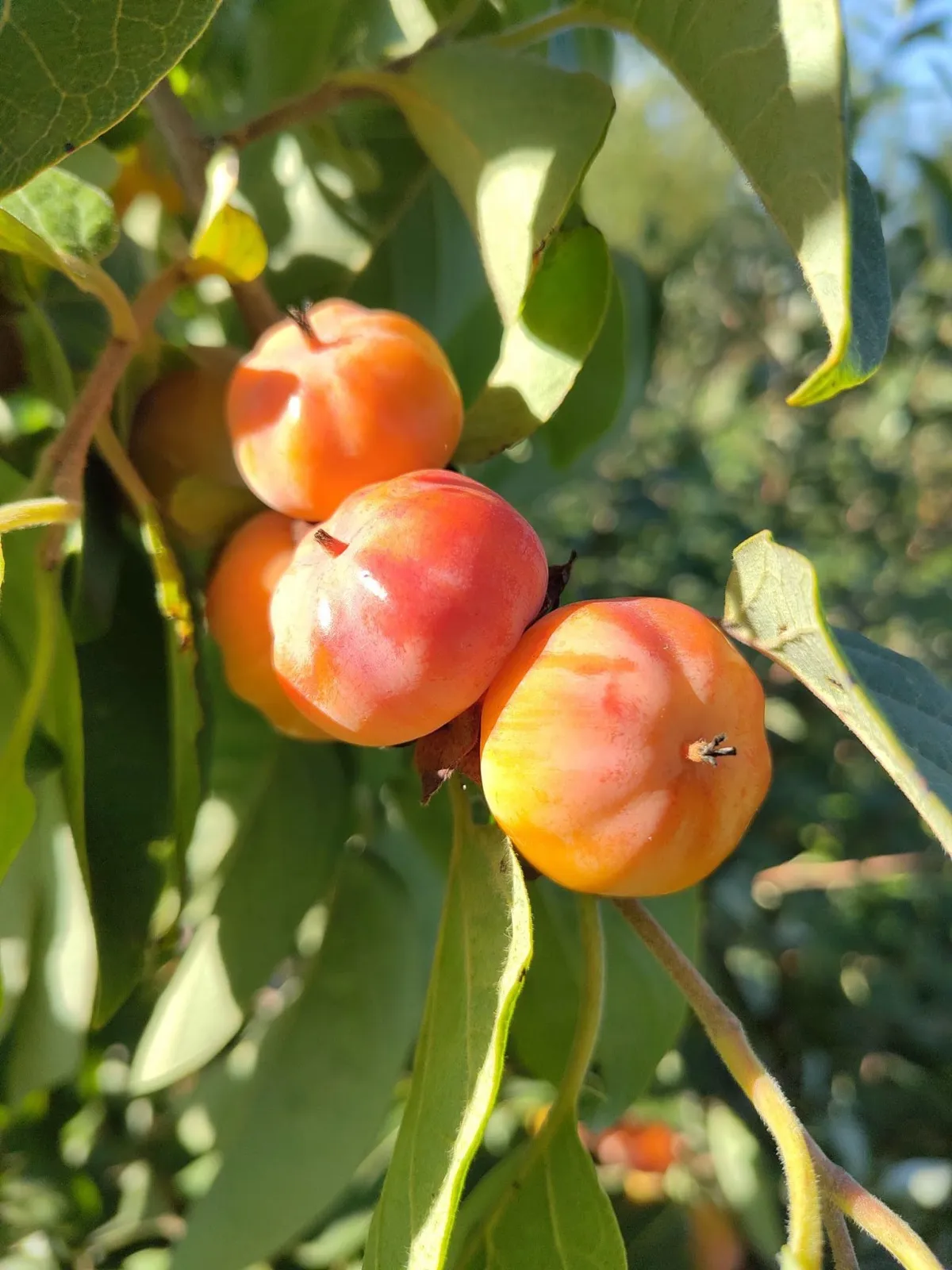
A few things make it especially nice in a food forest:
- It leafs out late. In spring the leaves come late, so the plants underneath get light for a long time.
- It flowers late. That means it suffers less from night frost than, for example, an apricot.
- Many kakis set fruit without pollination. One tree is enough. The American persimmon is different: there you usually need a male and a female tree, unless you choose a cultivar that pollinates itself.
- It has few problems with diseases and pests. Birds are its biggest fans.
- It is beautiful in every season. Fresh green leaves in summer, red and orange in autumn, orange fruit on bare branches in winter.
Growing information in a nutshell
| Botanical name | Diospyros kaki (kaki), Diospyros virginiana (American persimmon) |
| Layer | Low tree layer |
| Size | Kaki in the Netherlands usually 3 to 5 metres tall. The American persimmon grows larger, 6 to 9 metres |
| Hardiness | Kaki about -15 to -17 °C, depending on the cultivar. Young trees are more sensitive. The American persimmon is much hardier |
| Flowering | May to June |
| Harvest | October to December, often only after the first night frost |
| Soil | Well drained. On virginiana rootstock it also tolerates heavier and wetter soil |
| Position | Full sun, warm and sheltered. A south-facing wall is ideal |
| Care | Little pruning needed. Protect young trees from hard frost and late night frost in their first winters. Remove suckers from the rootstock |
Which cultivars for a food forest in the Netherlands?
- ‘Nikita’s Gift’ a cross between kaki and American persimmon. Hardy, pollinates itself and stays fairly compact at 2.5 to 3.5 metres. Sweet fruit with a hint of apricot. Harvest in November, after the first night frost.
- ‘Rosseyanka’ also a cross between kaki and American persimmon. Golden-yellow to orange fruit with a sweet, fruity taste. Hardy to about -17 °C.
- ‘Kostata’ a true kaki, hardy to about -17 °C. It is astringent, so you eat the fruit once it is soft.
- ‘Meader’ an American persimmon that pollinates itself, so you only need one tree. Very hardy, fruit up to about 5 centimetres and beautiful autumn colour.
If you have a cold or exposed spot, choose ‘Nikita’s Gift’ or ‘Meader’. If the tree stands warm and sheltered against a south-facing wall, you can also try a true kaki.
Harvesting and storing
In the Netherlands kakis ripen late. They often still hang on the tree after the leaves have dropped. A light night frost actually helps the ripening along.
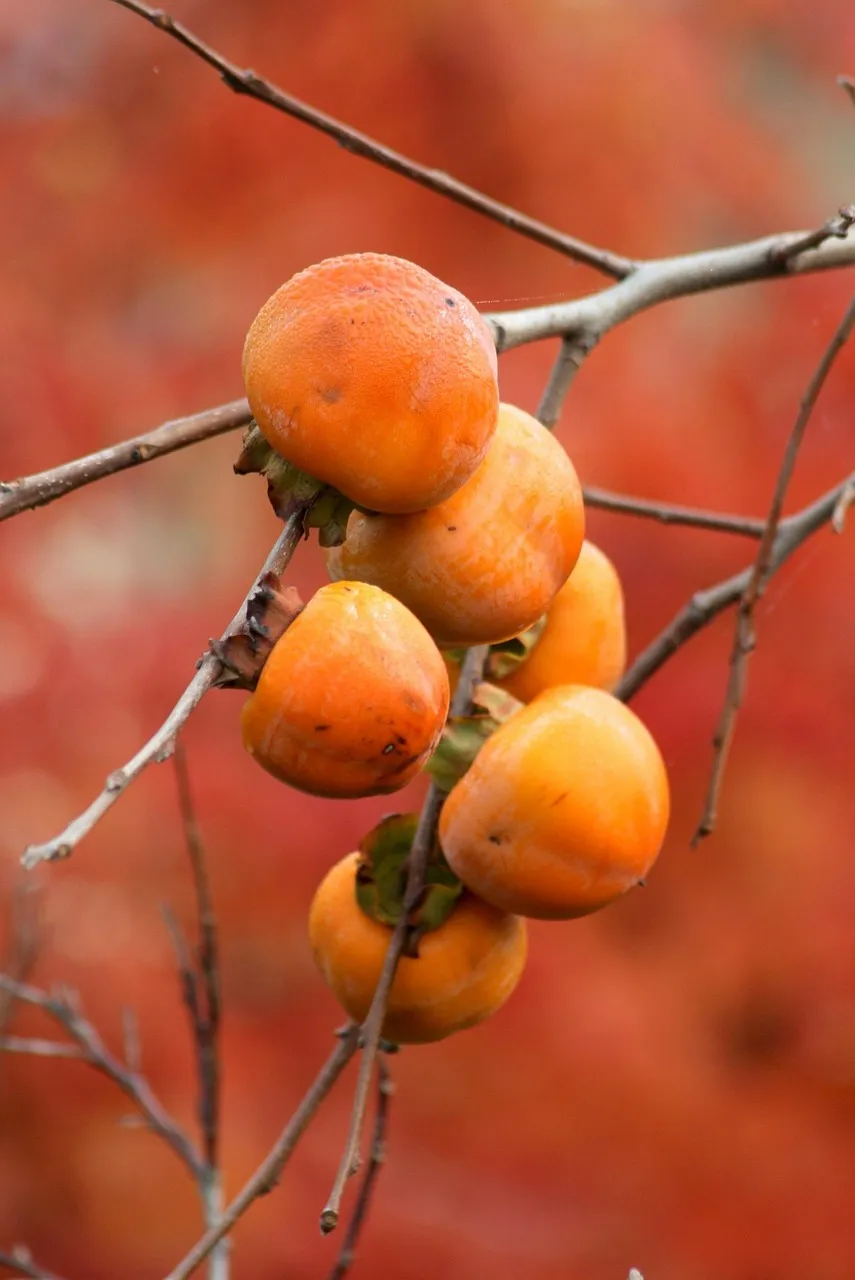
Pick them before it really starts to freeze hard and let them finish ripening indoors. Put them in a box or bag with a few apples. Apples give off a gas that speeds up ripening.
Kakis also keep for a long time. Put them in a crate somewhere cool and you can eat them all winter. Bring a few inside at a time to soften.
An astringent kaki is only ready when it is as soft as a ripe tomato, or softer. Cut off the top and spoon it out. You can also dry them. In Japan peeled kakis are hung outside on strings, where they slowly turn sweet and chewy, a bit like a dried fig.
Is the kaki healthy?
The orange colour comes from beta-carotene, which your body turns into vitamin A. There is also fibre, some vitamin C and manganese. A kaki contains more fibre than an apple.
One warning: do not eat large amounts of astringent kakis that are not yet ripe. The tannins can clump together in your stomach. Just wait until it is soft. It tastes much better then too.
A tip for planting
Planting a kaki this winter? Write down the cultivar and the rootstock straight away. In the app you add them to the tree on the map. That way, ten years from now, you still know exactly which cultivar is growing there, and where those suckers come from.
The My Food Forest app launches in November 2026. Want to stay up to date? Sign up for our newsletter on the homepage!