Plant in the Spotlight: Sweet chestnut
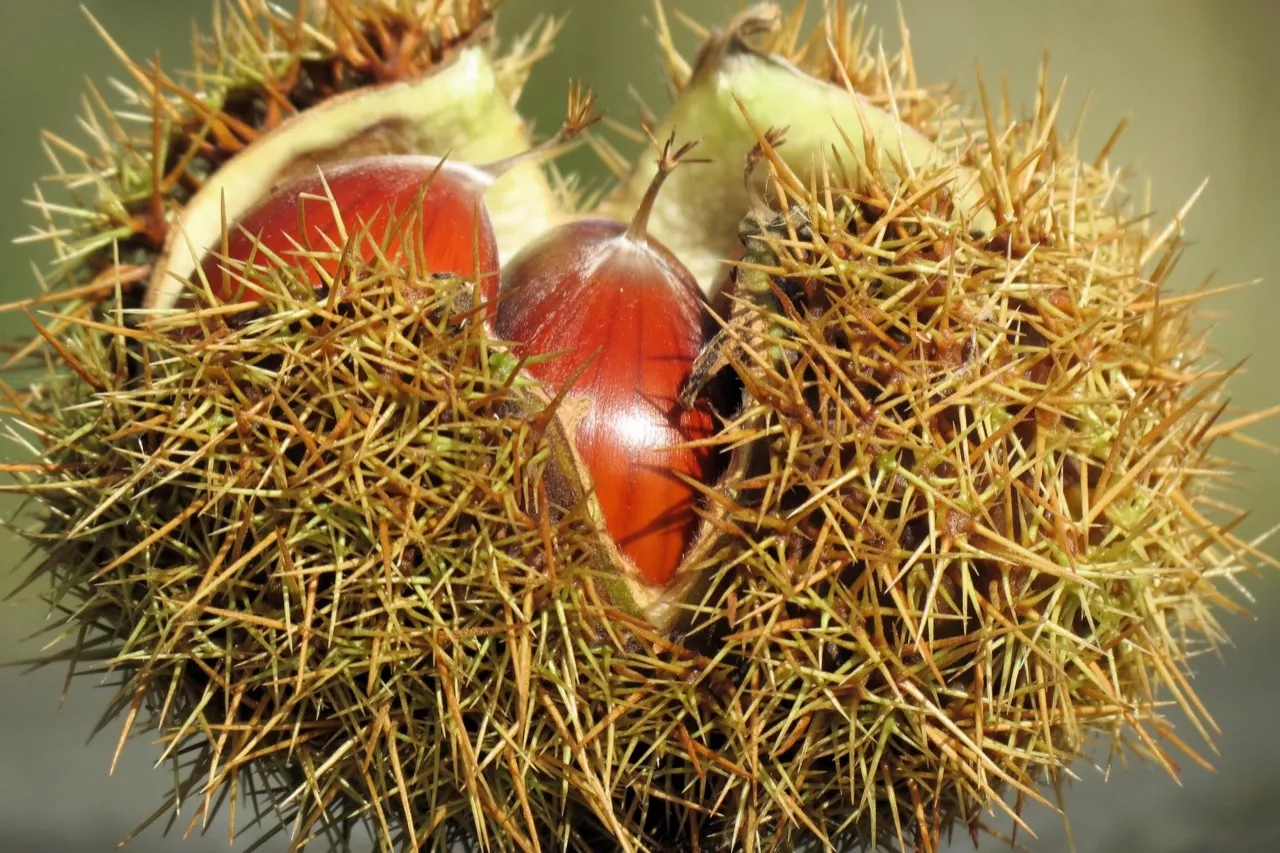
Most chestnuts fall from the tree in October. The spiny husks then lie under the trees. Now, in November, it is time to plant one yourself.
Time to put the sweet chestnut in the spotlight. A tree that for centuries was not a snack, but simply food.
Bread that grows on a tree
The sweet chestnut (Castanea sativa) comes from the area around the Mediterranean, Turkey and the coast of North Africa. The name probably comes from a Greek place name. Exactly where that place was is not certain. The Romans turned it into Castanea.
In the mountains of southern Europe the chestnut was the most important food for centuries. In the Cévennes in France and on Corsica whole villages lived on it. Grain grew poorly on those steep slopes, chestnut trees did not. The nuts were dried and ground into flour. People baked bread with it, or cooked porridge and soup. That is why in France the chestnut is also called l’arbre à pain: the bread tree.
How did it reach the Netherlands?
It is generally assumed that the Romans brought the sweet chestnut to our region. Some sources name the Celts, even earlier. We do not know for sure.
So it is not native, but it has been planted here for centuries and simply belongs. And it seems to cope well with the changing climate: Wageningen University & Research calls it fairly drought tolerant and is studying which trees do best here.
The sweet chestnut in the food forest
The sweet chestnut is a large tree. In the Netherlands it can grow over thirty metres tall. So it belongs in the top layer of the food forest and needs room.
A few things to know before you plant one:
- It likes acid soil. Ideally deep, moist and fertile soil, such as loamy sand. Chalky soil, heavy clay and wet ground are not suitable. It copes badly with water that stays in the soil.
- It stands firm. It grows a deep taproot, a main root that goes straight down. That makes it hard to blow over.
- It flowers late. In June and July, when many other trees have finished. Bees, beetles and flies visit the flowers.
- Plant at least two. A chestnut gives far more nuts when another chestnut nearby pollinates it.
- It is good for wildlife. The stag beetle, the largest beetle in the Netherlands, can breed in the sweet chestnut. Bats, woodpeckers and pine martens live in the hollows of old trees.
- It is sensitive to late night frost. Choose a spot where cold air does not linger in spring.
The best time to plant it is autumn. So now.
Hybrid chestnuts
In Dutch food forests you see more and more hybrid chestnuts. These are crosses between the sweet chestnut and the Japanese chestnut (Castanea crenata). Most come from France, where researchers have been crossing them since the last century.
Why a cross? The sweet chestnut does not have an easy time in Europe. A few diseases and pests hit it hard:
- Ink disease. A disease that attacks the roots. The tree slowly dies.
- Chestnut blight. A fungus that attacks the bark.
- The chestnut gall wasp. A tiny wasp that causes lumps on the young twigs and leaves. As a result far fewer flowers and nuts grow. In the Netherlands it was first found in 2015, in Aalten.
The Japanese chestnut copes better with ink disease and chestnut blight. A cross takes the best of two trees: the taste of the sweet chestnut and the resilience of the Japanese one. Hybrids are not fully immune, but they get sick less easily. They also bear nuts while still young. With a sweet chestnut grown from seed you never quite know what you get. And the nuts of hybrids are large.
There is a downside too. Some hybrids leaf out early in spring and then suffer from late night frost. They want a warm, sheltered spot. How they do in our climate in the long run remains to be seen.
The Chinese chestnut
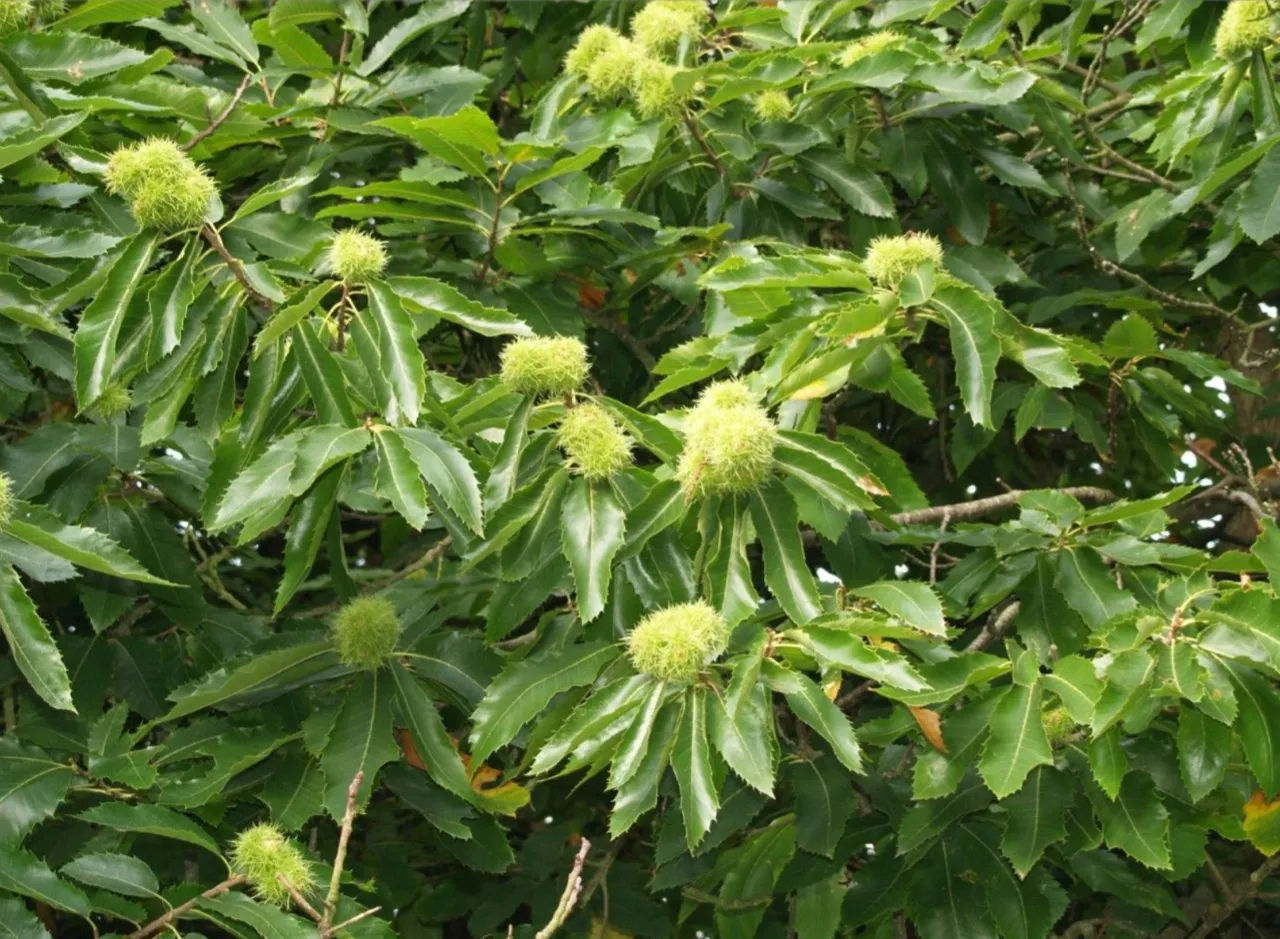
In nurseries and food forests you also come across the Chinese chestnut (Castanea mollissima). It comes from China and Korea, where it has been grown for thousands of years. At usually twelve to eighteen metres it stays a lot smaller than the sweet chestnut.
Its strongest point: it copes well with chestnut blight. Not every tree equally well, but many hardly get sick from it. The nuts are sweet. Some people find them the tastiest of all chestnuts.
Planted near a sweet chestnut, the two cross easily. That gives hybrids too. In America researchers use the Chinese chestnut to make their own chestnut resistant to blight again.
Growing information in a nutshell
| Botanical name | Castanea sativa (sweet chestnut). Hybrids are crosses with Castanea crenata (Japanese chestnut) or Castanea mollissima (Chinese chestnut) |
| Layer | Top tree layer |
| Size | In the Netherlands over 30 metres tall |
| Lifespan | Hundreds of years |
| Flowering | June to July |
| Harvest | October |
| Soil | Acid to slightly acid, deep, moist and fertile. No chalk, no heavy clay, no wet ground |
| Position | Full sun, room. Sheltered from late night frost |
| Care | Little pruning needed. Plant at least two trees for a good harvest. Plant in autumn |
Which cultivars for a food forest in the Netherlands?
- ‘Bouche de Bétizac’ a hybrid from 1962, the best known of all. Large to very large nuts and a good harvest while still young. It makes no pollen of its own, so it always needs another chestnut nearby. It leafs out early, so give it a spot sheltered from night frost.
- ‘Marigoule’ a hybrid with large, red-brown nuts. Leave them for a few days after harvest and they turn very sweet. They store well. Of all hybrids it copes best with ink disease. It is a good pollinator for ‘Bouche de Bétizac’. It does want rich soil and copes less well with cold.
- ‘Belle Epine’ a true sweet chestnut, not a cross. Often used as a pollinator for ‘Bouche de Bétizac’.
A good combination is ‘Bouche de Bétizac’ with ‘Marigoule’ or ‘Belle Epine’ next to it. Ask the nursery which cultivars pollinate each other well.
Harvesting and eating
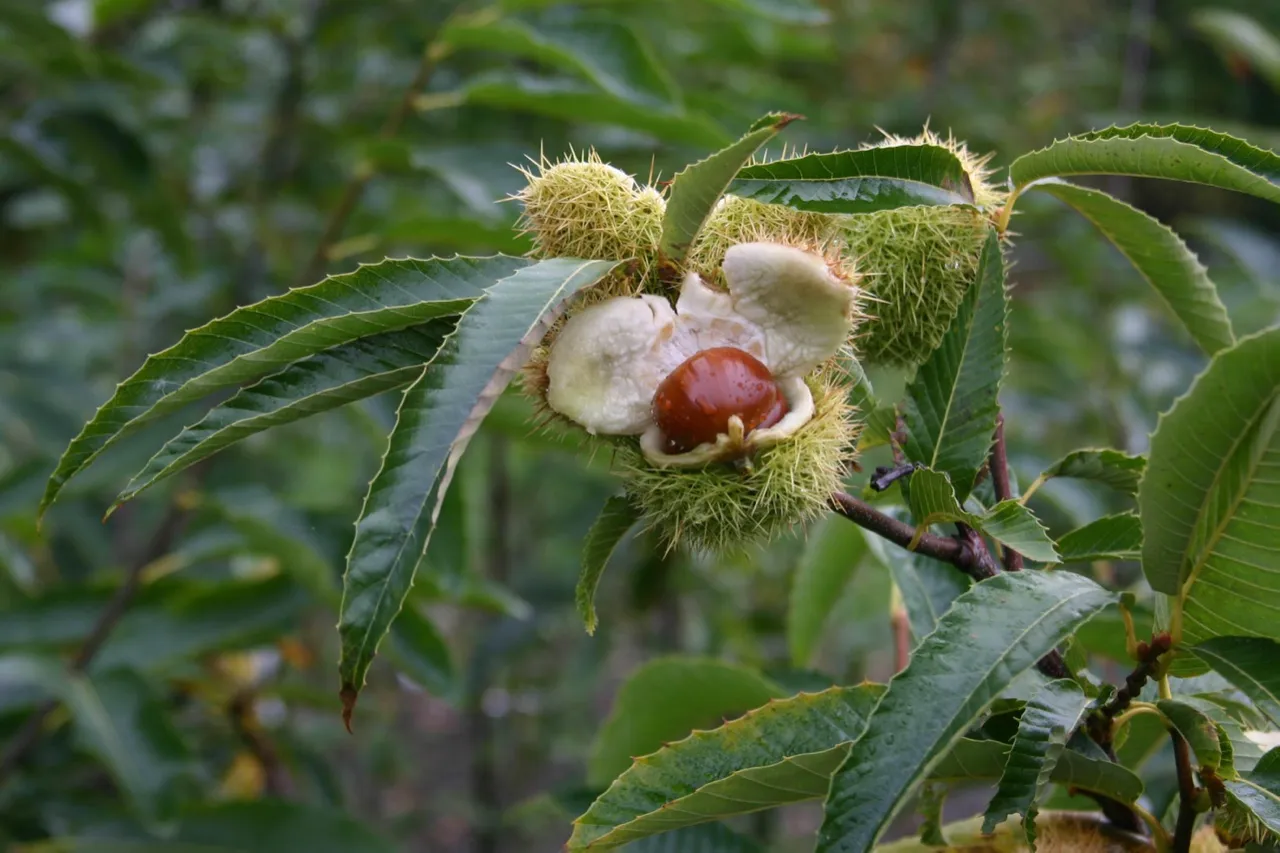
In October the husks fall from the tree and split open. Pick up the chestnuts as soon as you can. Wear gloves, the spines really are sharp.
Roasting. Cut a cross in the shell, or they burst open in the oven or pan. Roast them until the shell curls open. Peel them while they are still warm, that makes it easier.
Cooking. Boiled chestnuts go well in soup, stews or with Brussels sprouts and red cabbage.
Storing. Fresh chestnuts dry out quickly. Keep them cool and do not wait too long after harvest to eat them. To keep them longer, dry them. Dried chestnuts can be ground into flour.
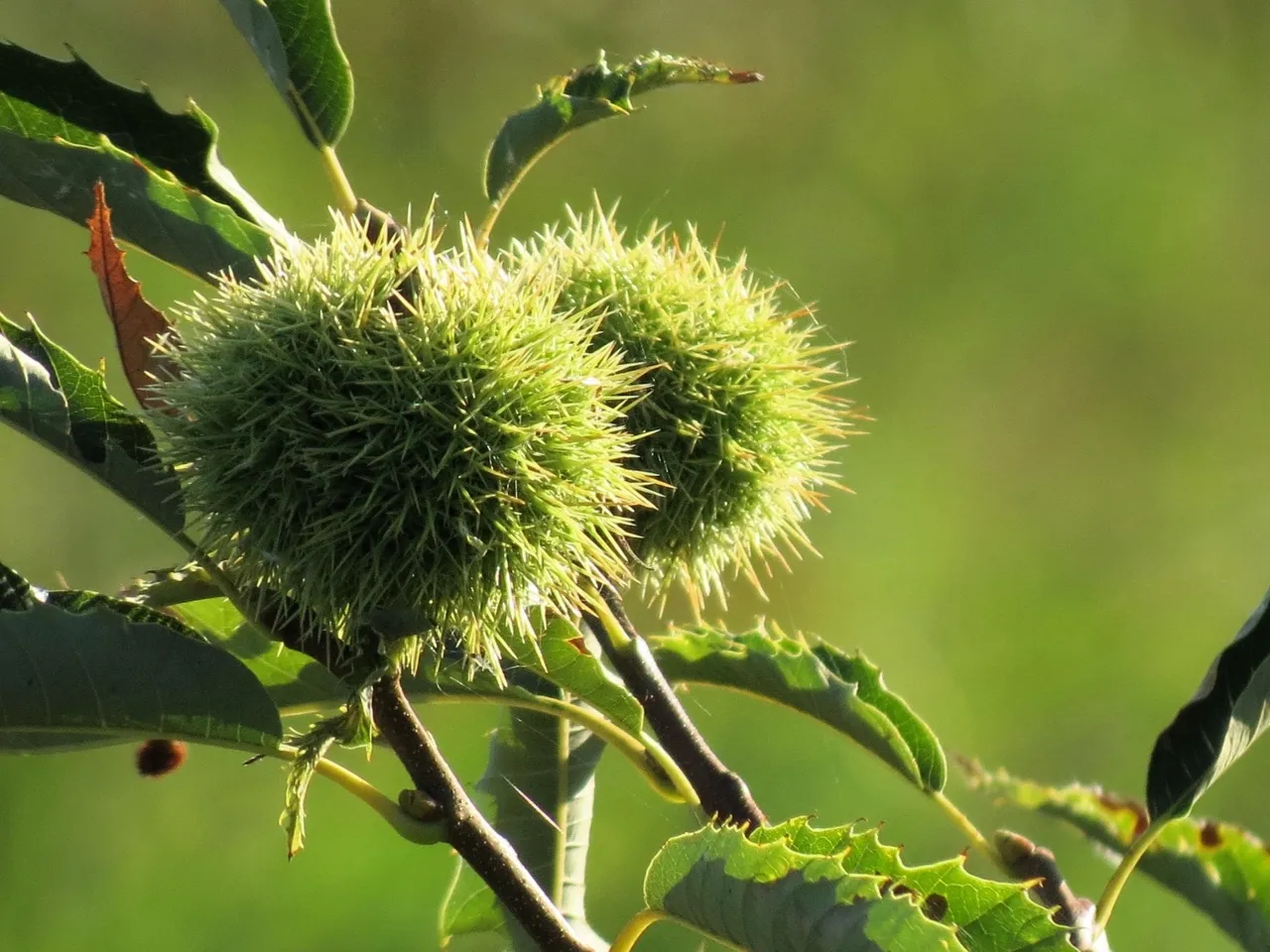
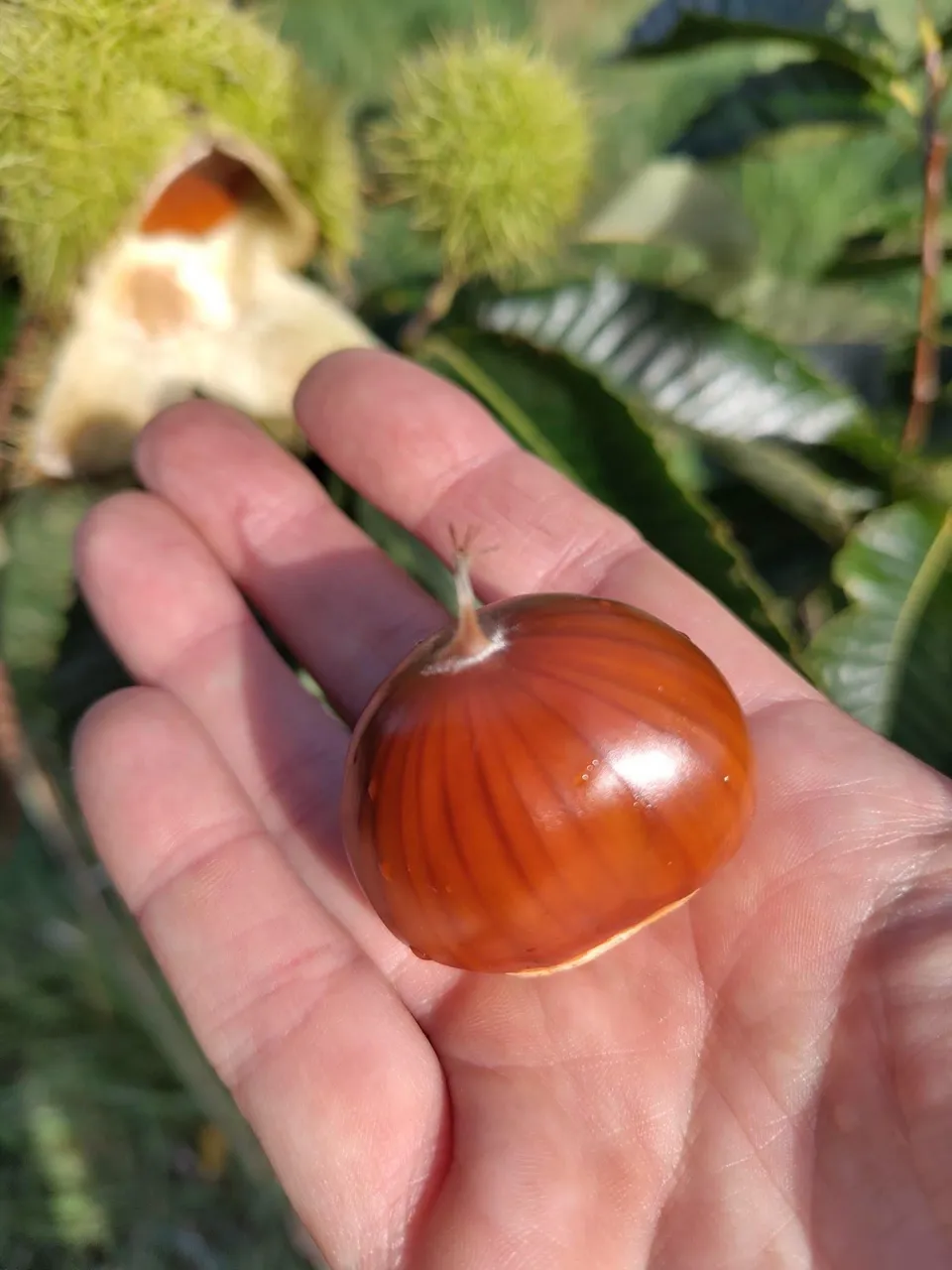
Watch out: do not confuse the sweet chestnut with the horse chestnut. That one is not edible. You can tell them apart by the husk. The sweet chestnut’s is full of long, thin spines. The horse chestnut’s has short, sturdy spines set far apart. The sweet chestnut also has a little point on the nut, while the horse chestnut is completely round.
Is the sweet chestnut healthy?
The chestnut is an odd nut. Where other nuts are mostly fat, the chestnut is mostly starch. There is only about 2 grams of fat in 100 grams of roasted chestnuts. That is why it can stand in for grain.
It also contains fibre and a surprising amount of vitamin C, about 26 milligrams per 100 grams. That is unusual for a nut. And chestnut flour is naturally gluten free.
A tip for planting
Planting chestnuts this autumn? Add them to the app at the trees on the map, with the cultivar. Later you see at a glance which tree pollinates which. And in twenty years you still know exactly what is growing there.
The My Food Forest app launches in November 2026. Want to stay up to date? Sign up for our newsletter on the homepage!