Preparing the soil for our food forest: the steps and the costs
Just over 2,350 euros. That is what it cost to get the soil of our food forest ready for the first trees. The site is 0.66 hectares. In this post you can read what we did, in which order and what each step cost. So you know what you are taking on if you want to plant a food forest yourself.
Early this year we got the keys to our new home. In February we started preparing the soil. Now, in October, we are done.
Step 1: measure what is in the soil
We started with a soil analysis, done by Van Iersel. You take soil samples and send them in. A few weeks later you get a report. It shows how acidic the soil is (the pH), how much organic matter it holds and which nutrients are too high or too low, such as lime, magnesium and potassium. It also comes with advice on what to add.
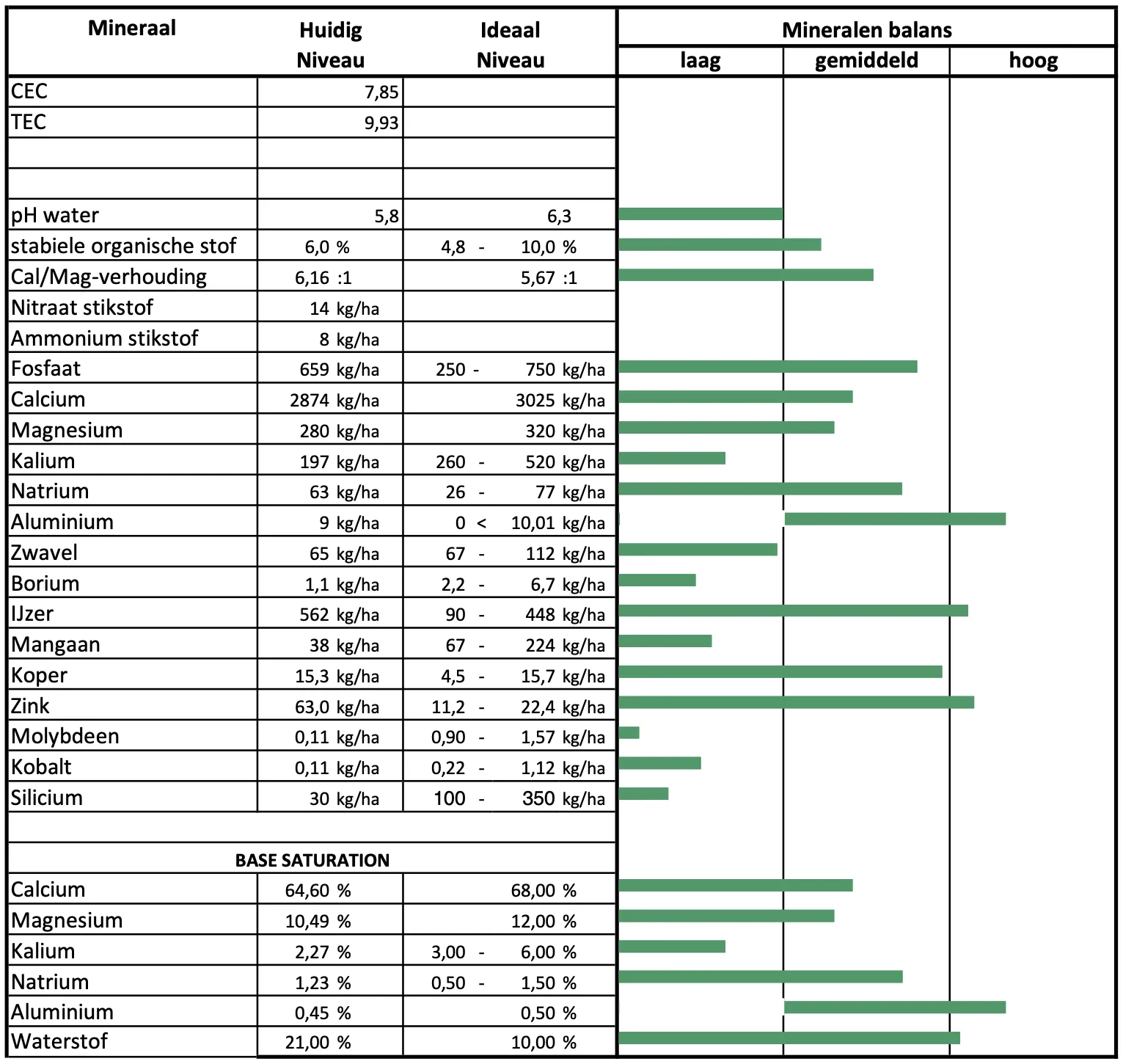
Our soil was too acidic. The pH was 5.8, while 6.3 is ideal for a food forest. There was too little lime, magnesium and potassium. There was also too little of a few elements that plants only need in small amounts, such as boron and manganese. Iron and zinc, on the other hand, were higher than needed.
There was good news too. The soil held enough organic matter, which is decomposed plant and animal material. And there was plenty of phosphate. So we did not need to add that.
Without an analysis you are spreading things on a hunch. You might spend money on something the soil does not need, while missing what it does lack. Every purchase in step 2 matches a line in this report.
Cost: € 180
Step 2: add what is missing
With the analysis in hand, we ordered what the soil lacked. That is different for every piece of land. If you have more land than we do, you need more and the costs go up.
| What | How much | Cost |
|---|---|---|
| Biolit | 1 big bag | € 610 |
| Crushed shells | 1 big bag | € 260 |
| Potassium and Dino Selenium | 6 bags of potassium, 1 bag of Dino Selenium | € 340 |
Biolit is finely ground volcanic rock, also called rock dust. It works slowly. As the rock dust weathers in the soil, it releases minerals such as calcium, magnesium and potassium. So it is not a quick fertiliser but a long-term addition.
Crushed shells are exactly that. Shells are mostly lime. Lime makes acidic soil less acidic, so the pH goes up. Coarse crushed shells work slowly, over several seasons.
Potassium helps trees get through dry spells. It also helps move the sugars from the leaves into the fruit.
Dino Selenium is calcium with a small amount of selenium. Martijn Aalbrecht, who helped us with the soil preparation and the design for our food forest, recommended it.
We spread the crushed shells and the biolit during the summer, before the subsoiling and rotary tilling. We did it by hand. That was a lot of work, so we did a bit at a time, spread over a few months.
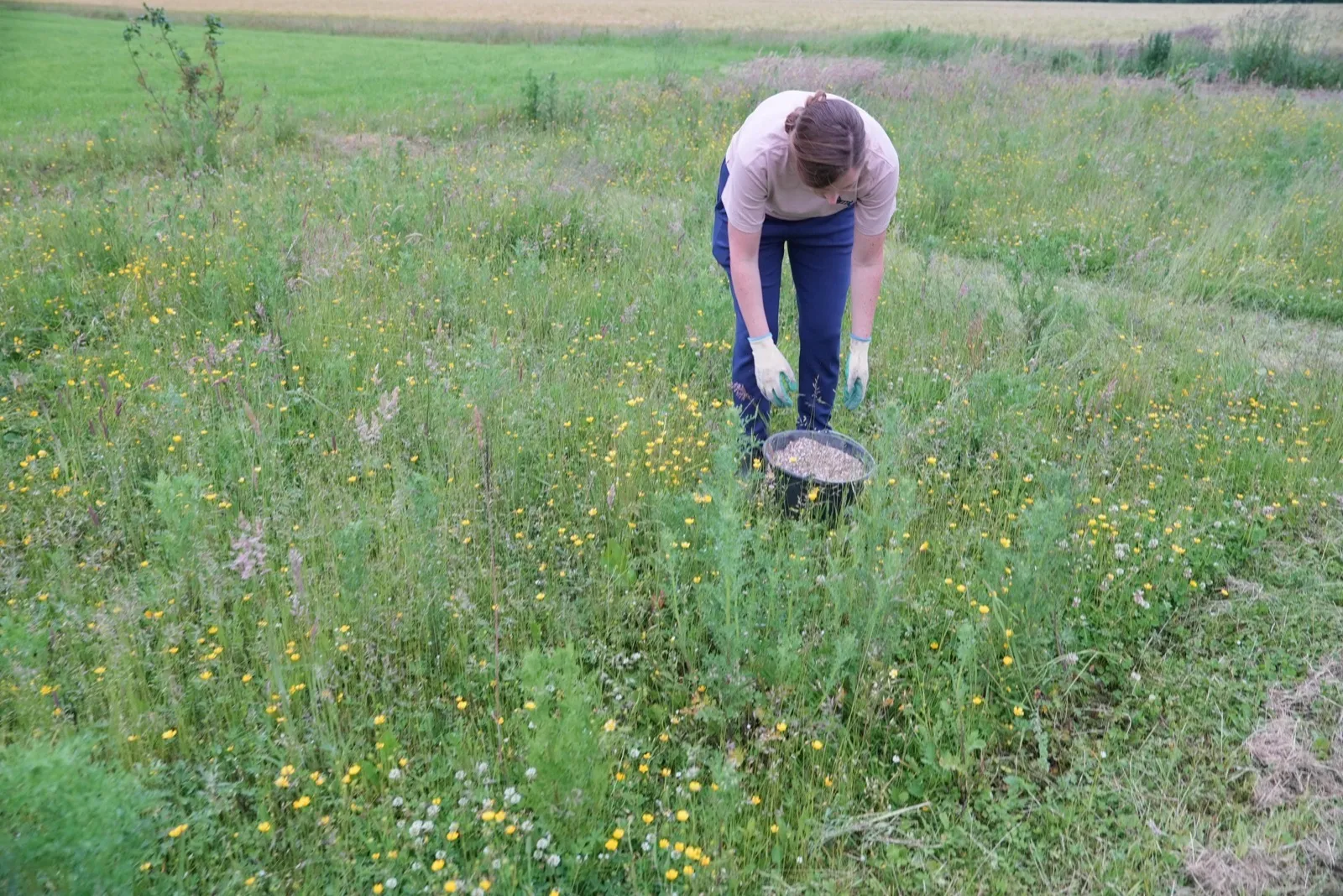
The potassium and the Dino Selenium are ready and waiting. We will spread them at the end of winter, also on Martijn’s advice.
Extra jobs not everyone has
We had other work to do first. We had the horse arena dug out and soil brought in. Where there used to be a small pond, there is now a larger one. And several sheds were removed from the land. That is specific to our site, so we leave those costs out of this post.
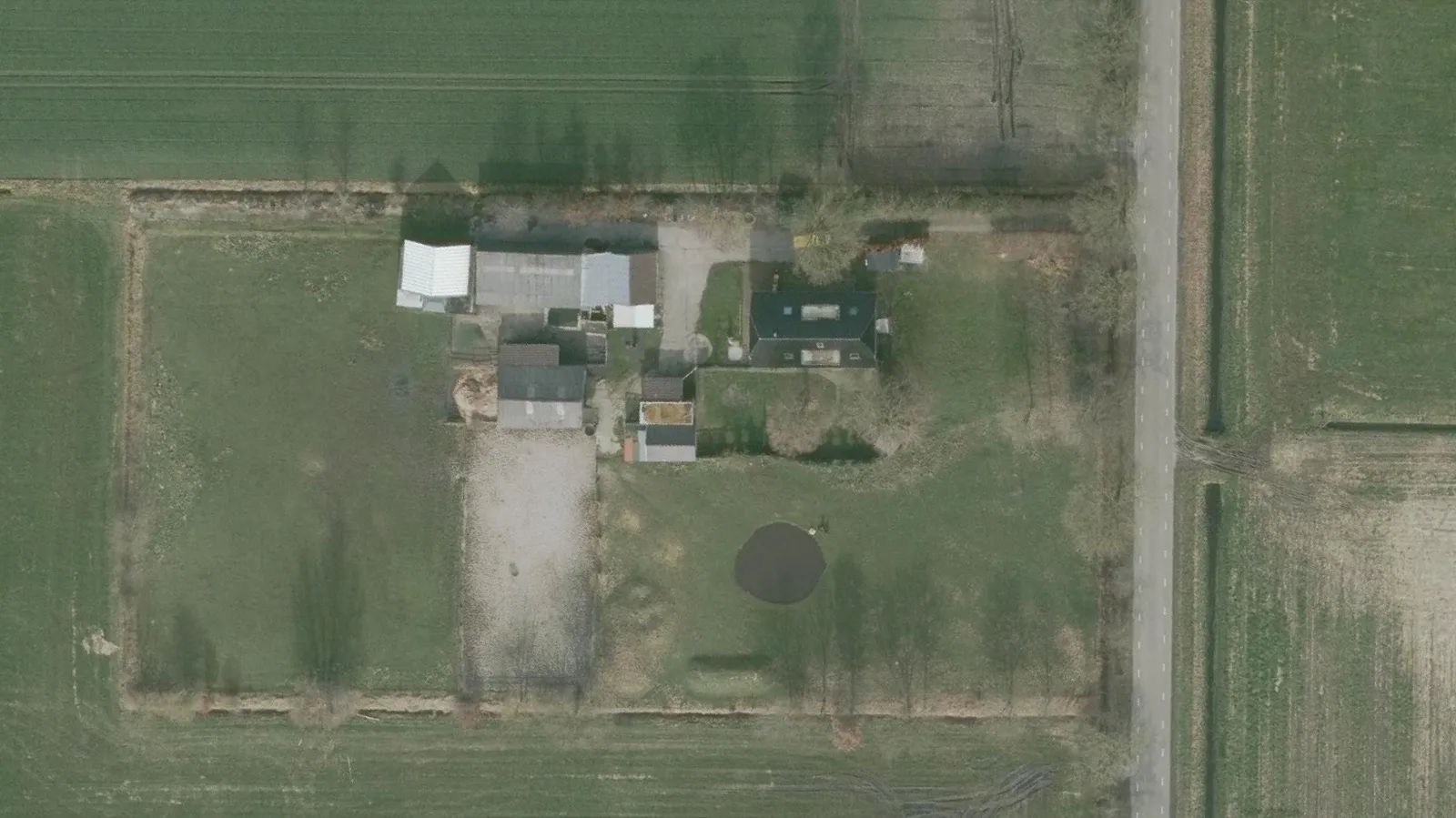
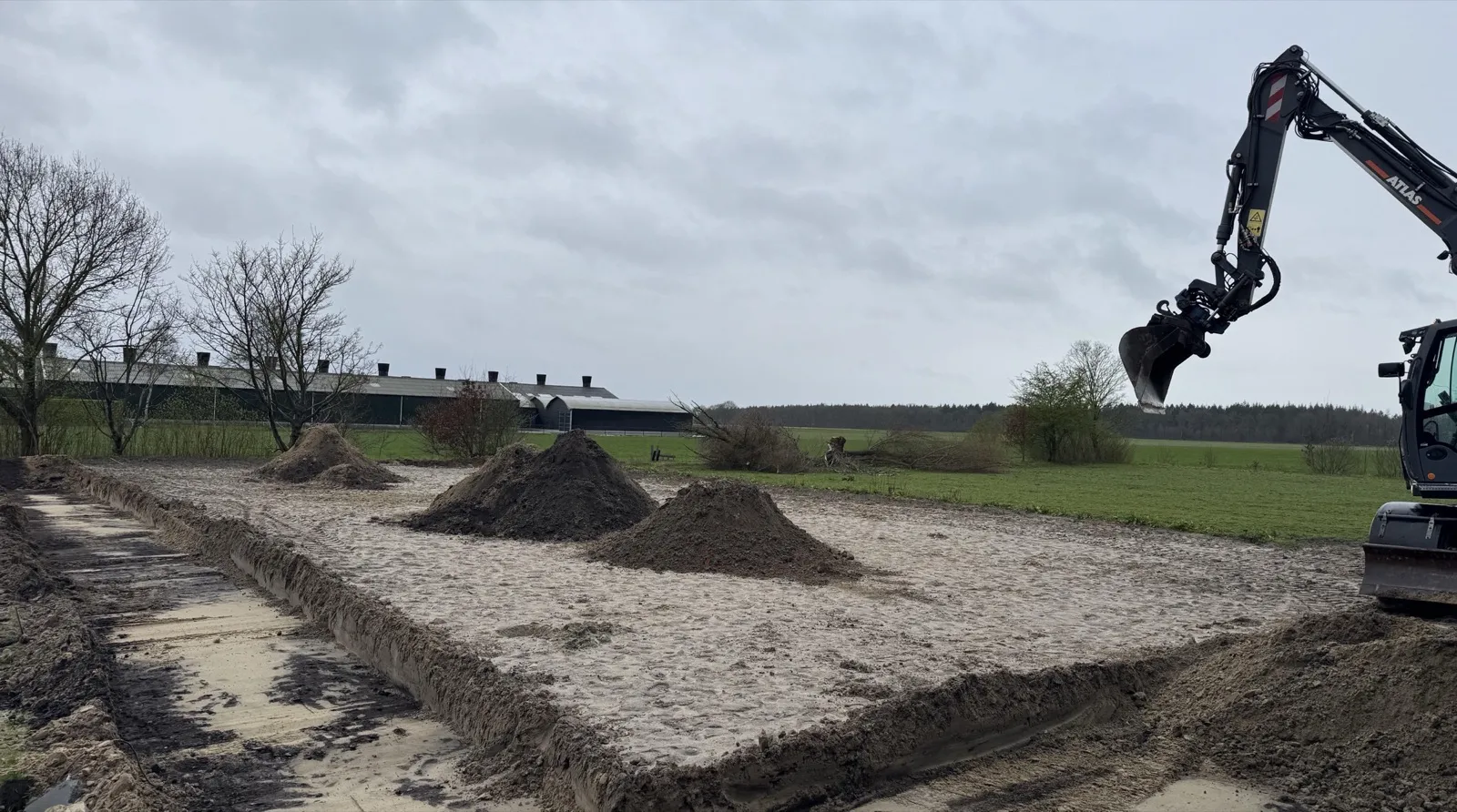
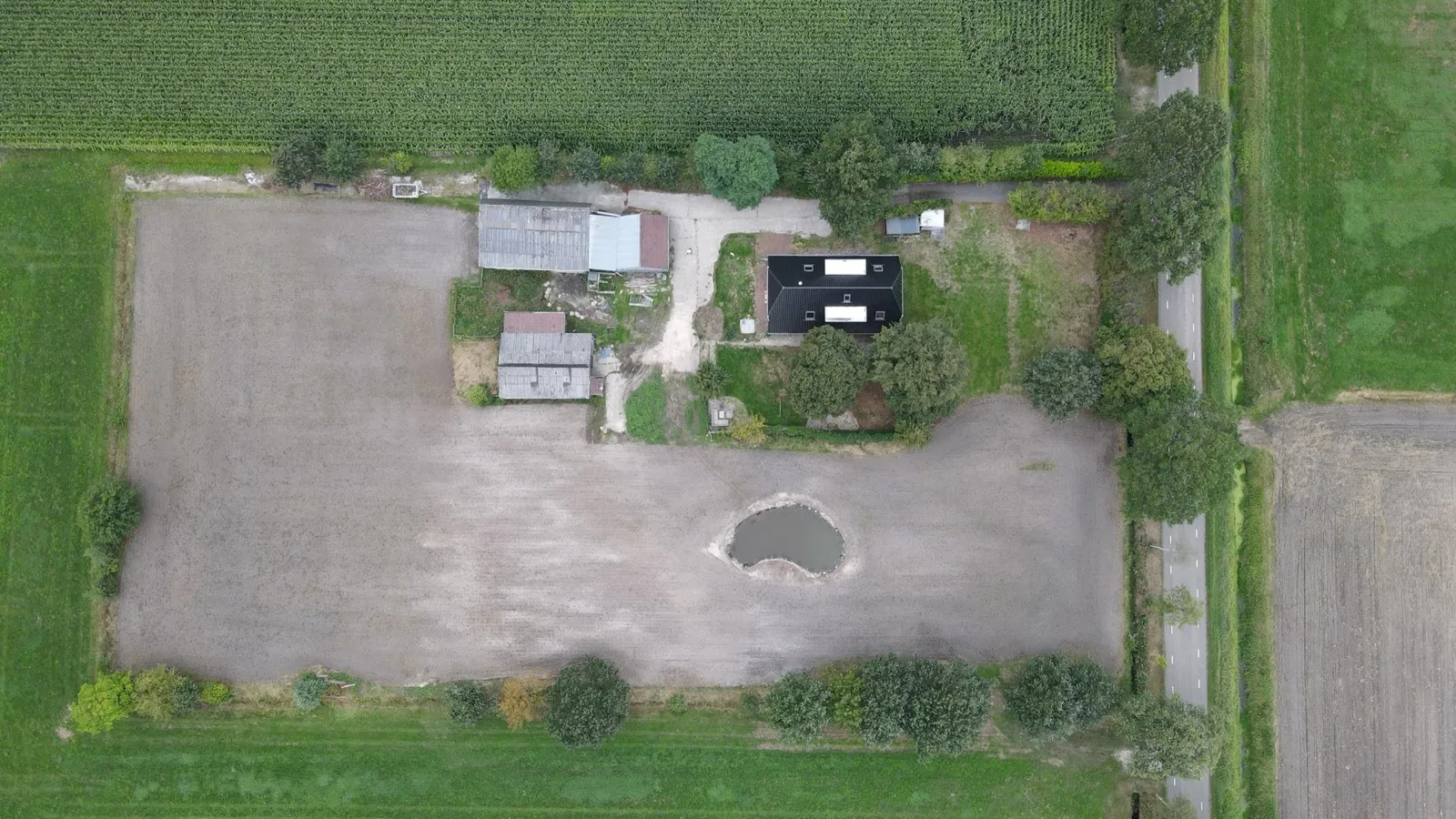
No such work on your land? Then you can start earlier in the year. Have the soil subsoiled and tilled in spring and sow a green manure from mid May, such as BioBodem Vroeg from Agri-Star. That gives the soil a whole extra growing season to recover.
Step 3: break up the hard layer
We had measured that the soil was compacted at a depth of 30 to 40 centimetres. That is a hard layer that water and roots struggle to get through.
Most roots of fruit and nut trees are in the top 60 centimetres. A hard layer at 30 to 40 centimetres is right in the way. Roots cannot get through and grow sideways instead of down. Rain drains away poorly, so in wet periods the roots get too little air. And in a dry summer they cannot reach the water further down.
So on 27 August a contractor came for two jobs:
- Subsoiling. Long tines go through the soil to just below the hard layer and break it open. Subsoil when the ground is dry, then the hard layer breaks best.
- Rotary tilling. This makes the top layer fine and crumbly. It left a good seedbed for the green manure.
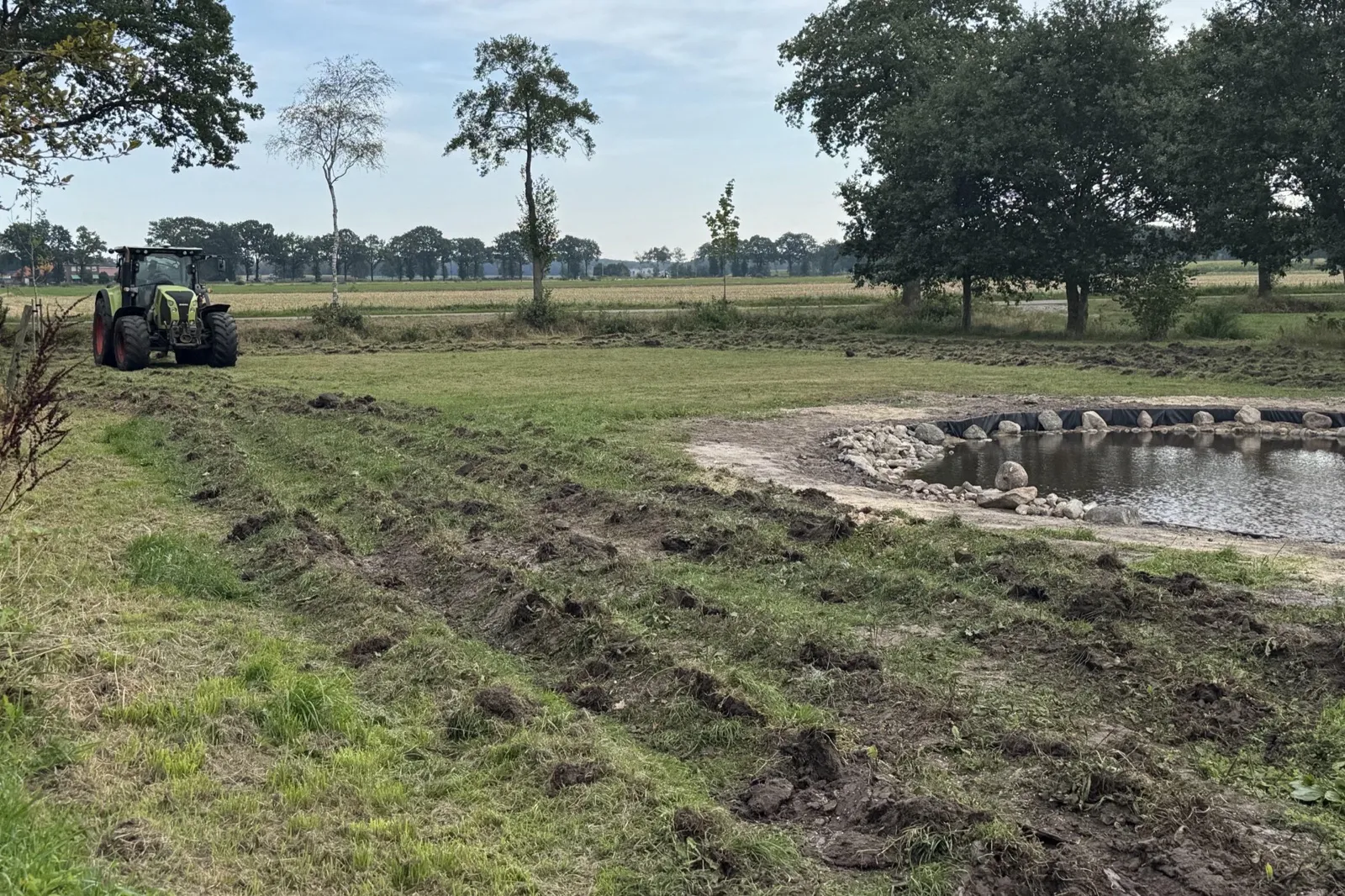
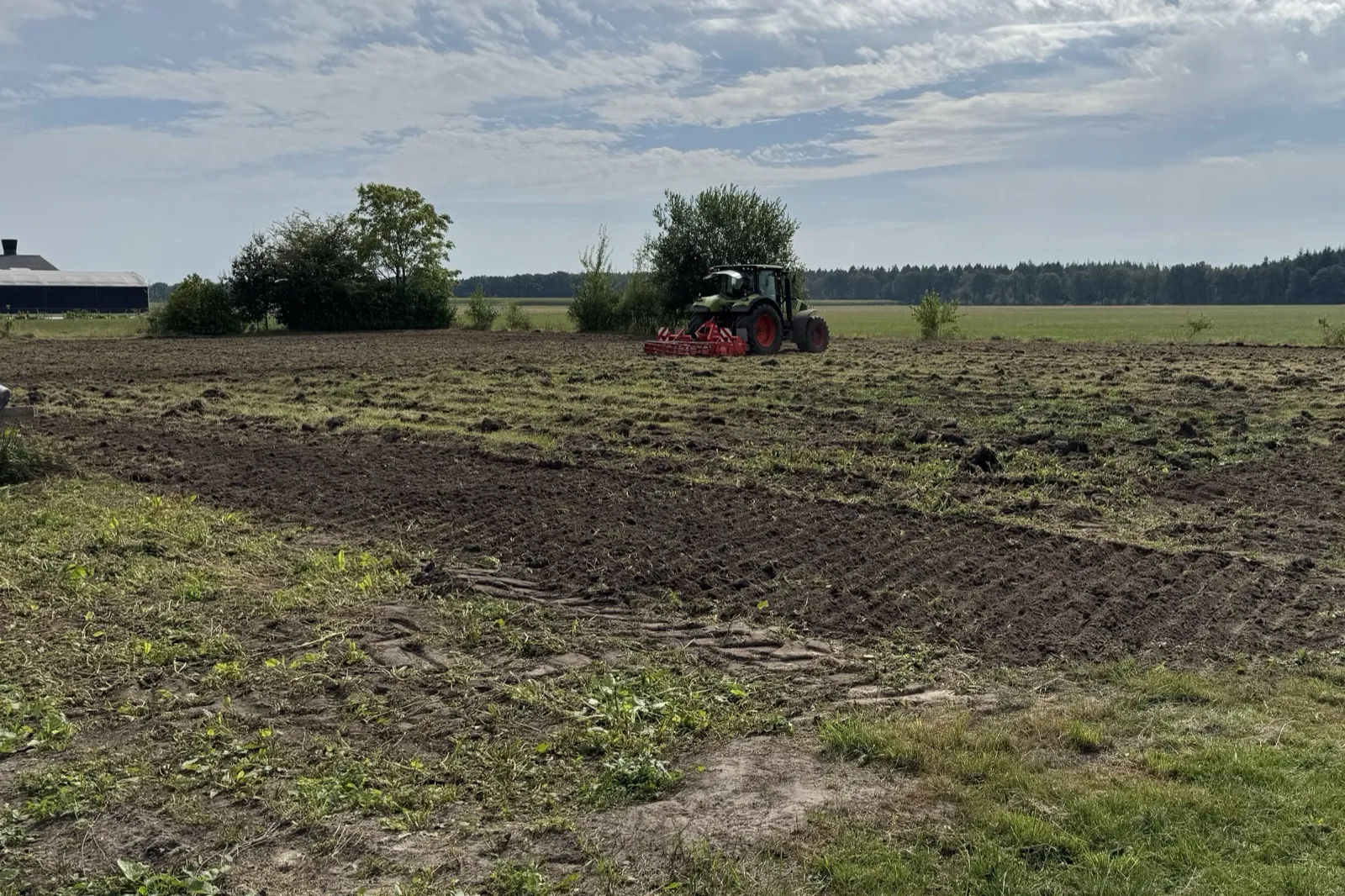
Cost: € 690 for four hours of work, including fuel and call-out charge
Step 4: sow a green manure
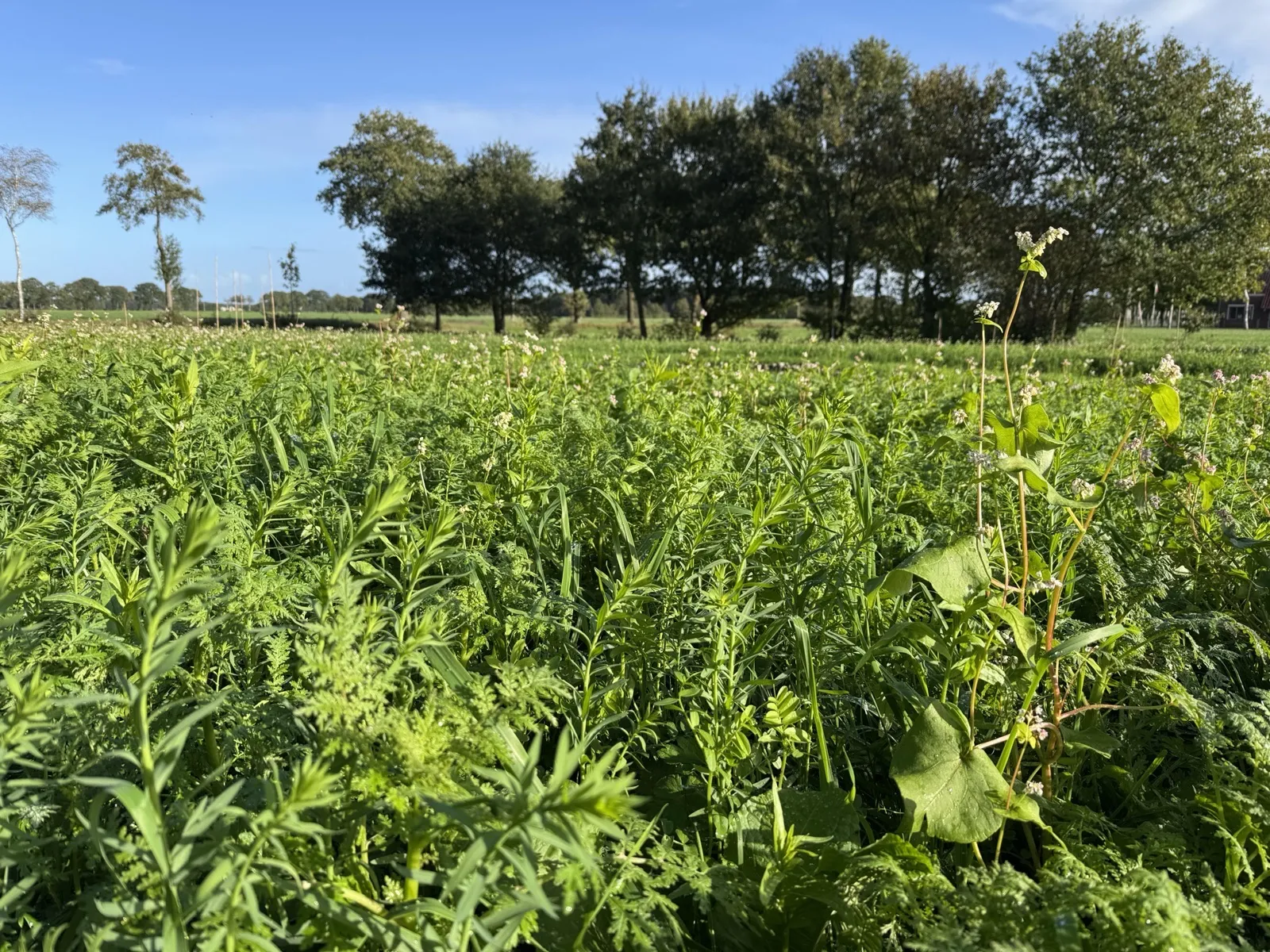
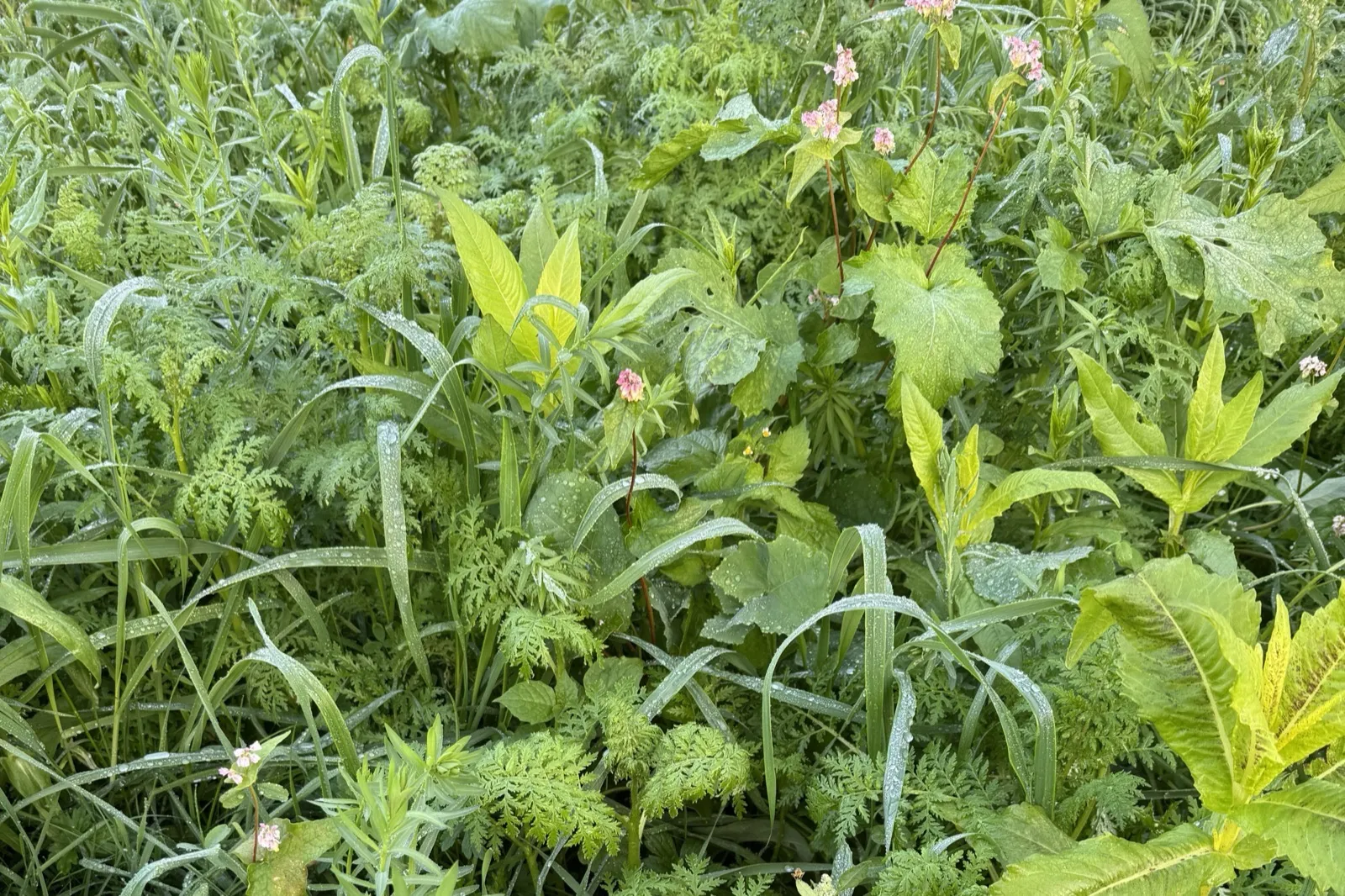
A day later, on 28 August, the land was sown with a green manure. That is a mix of plants you do not harvest, but sow for the soil. The roots keep the loosened soil open. The plants protect the soil from washing away and feed the soil life.
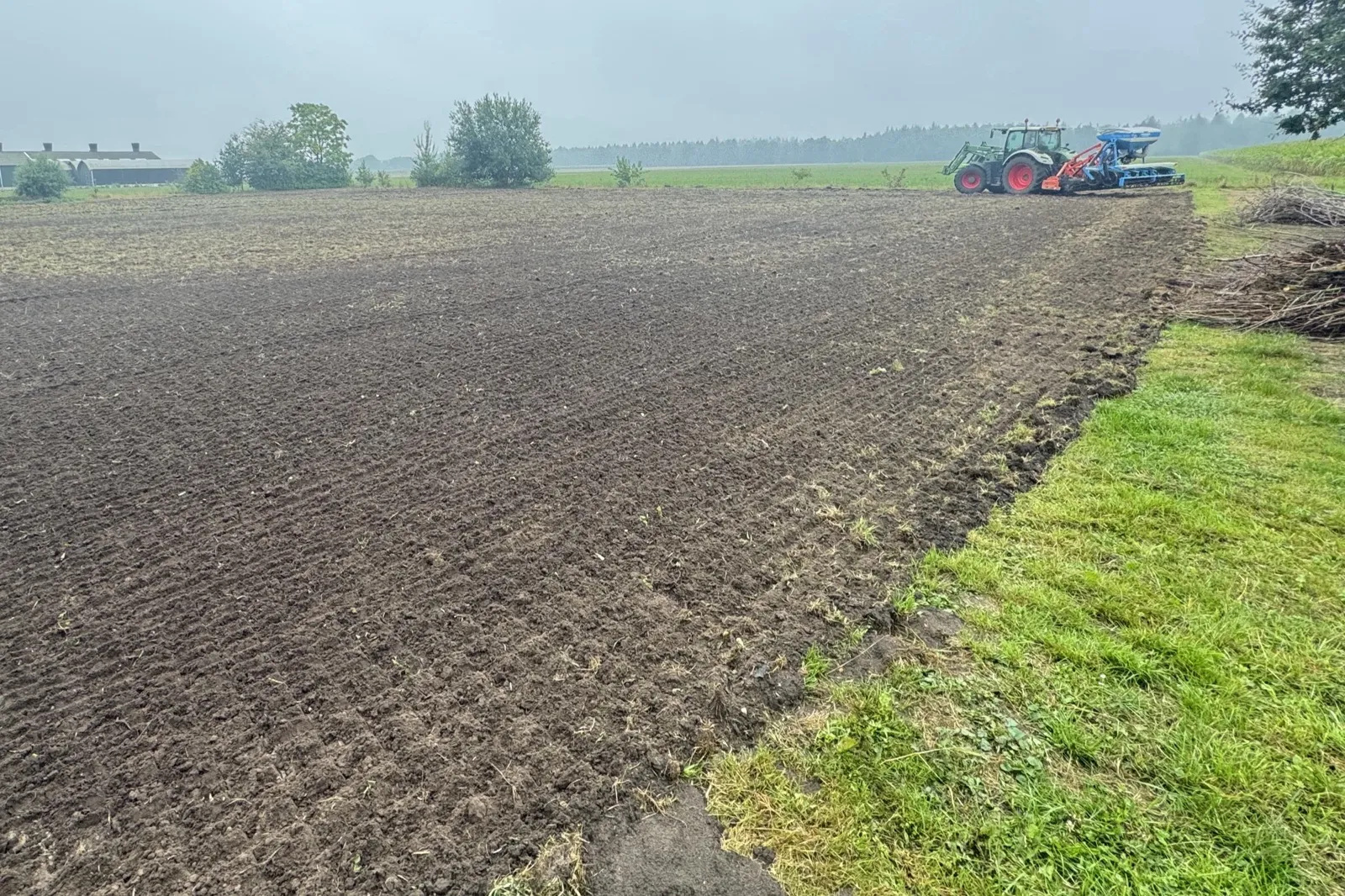
We chose BioBodem Laat from Agri-Star. It contains ten species, including vetch, clover, phacelia, buckwheat, flax, sunflower and rye. They all root at a different depth. You sow this mix from July to October.
The supplier recommends 60 to 65 kilos per hectare. We sowed 25 kilos. That is on the low side: for 0.66 hectares, about 40 kilos would have been better. It still worked out for us. The pond took up part of the area and the seed drill could not reach everywhere along the tall trees. In doubt? Order an extra bag.
Cost: € 100 for the seed and € 180 for the contractor who sowed it
Everything at a glance
| Step | Cost* |
|---|---|
| Soil analysis | € 180 |
| Biolit | € 610 |
| Crushed shells | € 260 |
| Potassium and Dino Selenium | € 340 |
| Subsoiling and tilling | € 690 |
| Green manure seed | € 100 |
| Sowing | € 180 |
| Total | € 2,360 |
* All amounts are rounded and include Dutch VAT. These are our 2026 prices. With another supplier, in another year or in another region, it may turn out differently.
That is about 3,600 euros per hectare. The digging at the horse arena, the pond and the sheds is not included.
How the soil is now
The first plants are now going in. When we walk across the land, we feel the difference. The soil is soft and gives under your feet. In the spots the subsoiler could not reach, such as right along the row of trees, it is still rock hard. That is where you really notice what the subsoiling did.
And the green manure looks wonderful.
What we want to pass on
Start by measuring. For 180 euros you know exactly what the soil needs. That analysis tells you which minerals are best to add to your soil.
Give the soil time. You plant a food forest for decades. A year of work on the soil before the first tree goes in is not a delay. It is the best start you can give the trees.
Ask for help if you are unsure. Martijn Aalbrecht, also known as De Voedselboss, gave us really good advice throughout this year. We are glad we took these steps. Without that work, the plants we are about to plant would not have had such a good start. Want help preparing your soil? We can wholeheartedly recommend Martijn. He also wrote a guest blog on planting a tree for us.
Questions about our approach? Send us a message via the contact form.
The My Food Forest app launches on 24 November 2026. Want to follow how our food forest grows? Sign up for our newsletter on the homepage.